Relocation squeezes risk into a single day. Furniture that has lived untouched for years gets dismantled, carried down steps, loaded into tight spaces, and driven across town. If the plan is built on trust alone, stress spikes with every thud on the truck deck. What calms nerves is not only good crews and solid packing, but a clear understanding of insurance and liability, and how those pieces actually protect you during local residential moving.
The moving industry uses specific terms, each with different implications for your wallet and your belongings. The fine print matters more than the logo on the truck, and asking the right questions can be the difference between a smooth claim and a costly argument. Here is how the coverage works in practice, what to check before signing, and how reputable residential moving companies handle hiccups without drama.
What “coverage” really means when you hire movers
Every legitimate household goods carrier offers at least one form of liability coverage by law. This is not the same as full insurance, and that confusion causes most of the frustration people feel after a claim.
Basic released valuation pays by weight, not by the actual value of the item. In many states, and under federal rules for interstate moves, that baseline is 60 cents per pound per article. If a 100-pound dresser is scratched beyond repair, the maximum carrier liability under basic coverage is 60 dollars. That is better than nothing, yet it is nowhere near replacement value for most furniture.
Full value protection sounds like insurance, and it functions similarly. The mover is responsible to repair the item, replace it with a similar item, or pay you the current replacement cost up to a declared value of the entire shipment. Customers choose a coverage level tied to the total weight or declared value, which sets the premium and any deductible. This is the option that actually tracks with how people value their items, but it requires accurate disclosure and occasionally an inventory of high-value articles.
Third-party insurance fills gaps that mover-offered options might not, especially for unusual items or specific perils. If your mover does not offer an endorsement for fine art or if you want coverage that includes transit-related weather losses, a separate policy can make sense. It also keeps claim handling outside the mover’s own internal process, which some owners prefer for perceived neutrality.
The key distinction is liability versus insurance. Released valuation is not insurance, it is a carrier’s limited liability. Full value protection is closer, but still administered through the moving company contract. Third-party policies behave like traditional insurance with separate terms and a separate claims channel.
The moving company’s liability and your responsibilities
Liability shifts based on custody, preparation, and packaging. Who packed the item matters. If the movers pack a box and it arrives damaged due to inadequate packing, that is generally on the mover. If you pack it yourself and it was intact when they took custody, the mover is often not liable for internal breakage unless the exterior shows mishandling.
There is also a chain-of-custody concept. Damages must be noted as close to delivery as possible, ideally on the delivery receipt. You can add notes such as “scratches on dining table top” even if nothing appears broken during the walkthrough. Moving services rely on documentation to trigger coverage. Without timely notations or a prompt claim within the stated window, your options narrow.
Finally, exclusions exist. Common carve-outs include particle board furniture that tends to fail under its own weight when moved, internal electronics that show no external damage, and items with pre-existing wear or weakness. Those exclusions vary by company and state. Reading the bill of lading and the valuation election form, including what is excluded, is not optional homework if you want peace of mind.
Valuing your household: how much protection do you actually need?
When people choose full value protection, they often underestimate the total replacement value of their shipment. A three-bedroom home can easily reach 25,000 to 60,000 dollars in replacement value, once you tally furniture, appliances, rugs, electronics, and the smaller items that fill boxes. Undervaluing the shipment to save on premiums can trigger a co-insurance effect. If you declare 20,000 on a shipment that reasonably totals 40,000, the mover may prorate claim payments.
Itemize anything worth more than a set threshold, often 100 dollars per pound or a similar declaration standard for high-value items. This includes artwork, certain instruments, and some boutique electronics. Keep photos, serial numbers, and purchase records if you have them. The goal is not to create a museum catalog, but to have enough proof to avoid debates later.
If you are planning local residential moving in Mesa or anywhere across town, remember local moves are not regulated by the same federal rules as interstate shipments. In Arizona, companies follow state standards and their own tariff language. Some offer 60 cents-per-pound released valuation by default on local jobs, others build in higher baseline protections or sell full value protection as an add-on. Do not assume the interstate rules or levels apply to your local residential moving scenario.
Where claims succeed or fail: real-world patterns
Damage patterns cluster around a few predictable culprits. Particle board bookcases swell and tear at cam locks when gripped. Glass shelves are packed without edge protection. Televisions ride on their stands with blankets rather than in cartons, then crack due to torsion. Appliances travel without shipping bolts or transit brackets, so drums and glass tops vibrate and break. On the higher end, art in glass frames often arrives with spider cracks when packed tight against rigid surfaces without corner guards.
Claims succeed when parties can show reasonable cause, proper preparation, and timely documentation. A mover who photographs the inventory at origin, notes pre-existing wear, and uses proper cartons leaves a trail that shortens the discussion later. A customer who opens priority boxes and furniture quickly, documents any visible issues, and files within the claim window tends to have faster resolutions.
Claims struggle when there is ambiguity. A box packed by the owner that shows no exterior damage almost never results in a payout for internal breakage under basic valuation. The same item in a professionally packed carton is usually covered. This is not the mover being evasive. It is how liability standards draw lines around responsibility.
Bulldog Movers and the practical side of coverage
Even among reputable residential moving companies, process separates strong operators from the rest. Bulldog Movers, a local residential and commercial moving company serving Arizona, illustrates how small habits influence outcomes. On local moves, crews arrive with more dish packs and mirror cartons than they plan to use. Overpacking increases time by minutes, not hours, and materially reduces claims. When a customer starts the job with their own boxes, the crew still offers to repack critical items that are obviously at risk, and documents that recommendation on the bill of lading. That documentation protects everyone if there is breakage.
Full value protection decisions happen before moving day. Bulldog Movers typically walks customers through two scenarios during an estimate: a standard release-level move with enhanced handling practices, and a full value protection move with a declared value and deductible option. The estimator helps build a rough tally of high-value items. If a customer chooses to self-pack but buys third-party coverage, the team confirms in writing who adjudicates a claim and what evidence is needed. That clarity before a single box moves reduces strain later.
The art of packing, and why it drives liability outcomes
Packing is half the job and most of the risk. Double-walled cartons for dishes, picture cartons with corner protectors, and TV boxes with foam inserts are not expensive, yet they change the calculation on damage likelihood. A mover that skimps on materials treats your home like a short-term project rather than a day’s worth of risk management.
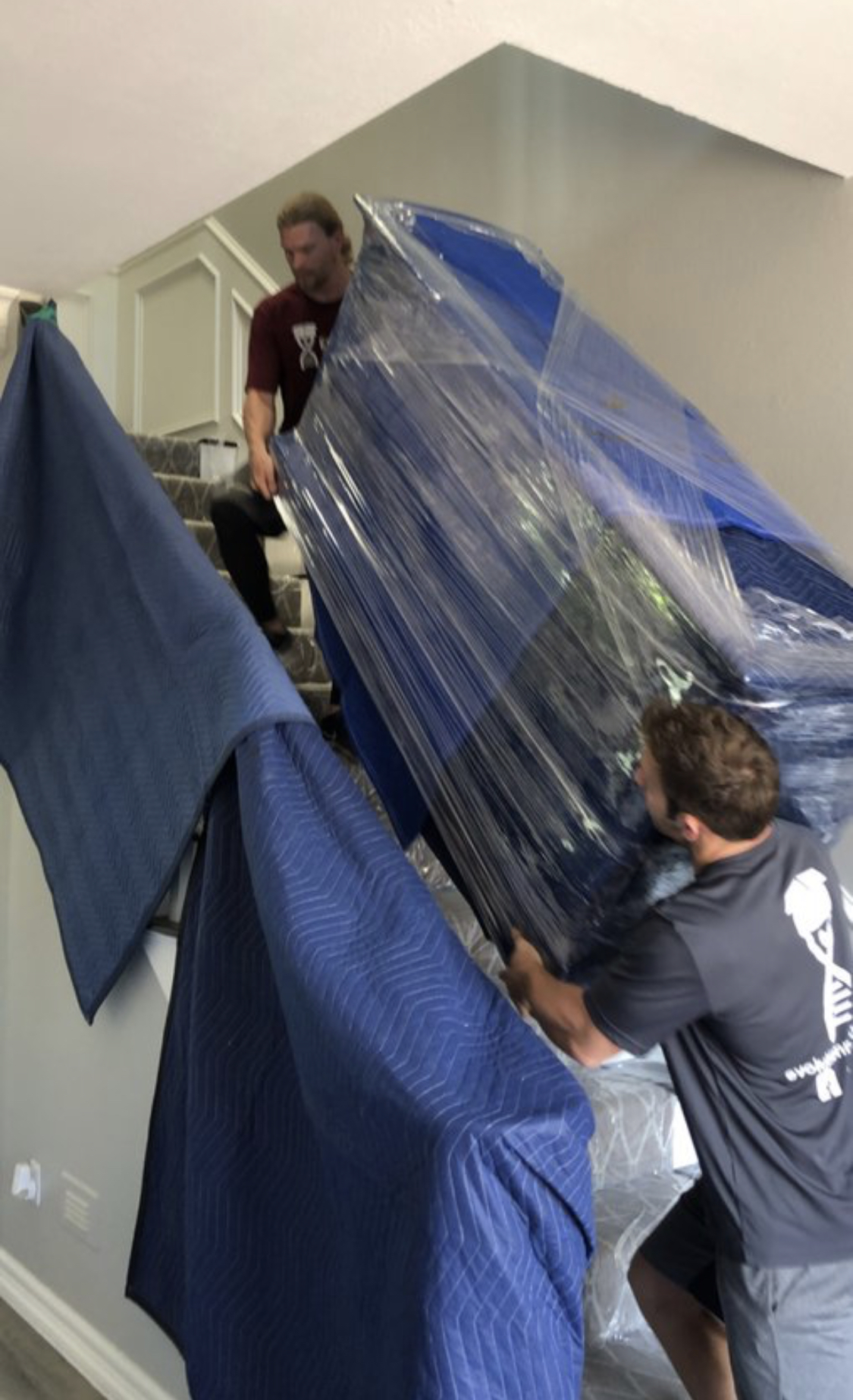
Good crews stage and sequence. They pack glass, art, and electronics first while everyone is fresh, when attention to detail runs highest. Heavy furniture rides at the front of the truck or on the lower deck. Lighter, fragile items migrate middle and top, isolated with soft goods. The truck becomes a set of compartments, each with its own logic. If you observe that logic as a homeowner, you will know whether your claim risk is rising or falling as the day goes on.
On a practical level, you can see the difference when a crew uses tape evenly around every seam, pads and straps items on the truck, and avoids loose spaces. Free air is the enemy. Vibration turns empty pockets into impact zones. When crews fill voids intelligently with cushions, rugs, or moving blankets, the load behaves as one unit rather than a rattle of parts.
Special items: what to flag and how to insure them
Some items merit separate treatment, either because of value or construction. Stone tops detach from bases and ride upright in cartons or slabs with edge guards. Upright pianos have their own boards; spinet and console pianos are strapped and corner-protected. Grand pianos require crating and extra hands. Wine collections need climate control and upright handling, and may be excluded from full value protection unless scheduled. Firearms and safes require legal compliance and often separate transport or declarations.
For high-value art or instruments, many moving services coordinate with fine art handlers or request third-party riders. The alternative is a custom crate on site, which adds cost but removes doubt. The right answer depends on your tolerance for risk and the margin between sentimental and market value. If replacement is impossible, err on the side of specialized handling and insurance language that mentions the item by name.
Documentation that actually helps you
Photos are time-stamped, indisputable, and simple to create. Walk through rooms the day before the move and take broad shots, then close-ups of high-value items. Photograph existing blemishes. During delivery, open boxes that contain fragile or critical items while crews are present. If something is wrong, point it out immediately and note it on the receipt. Follow the mover’s claim instructions, but also send your own email summary that day. The tone matters. Clear and factual notes speed resolution more effectively than frustration.
For local residential moving Mesa residents, claim windows for local jobs can be short, sometimes 7 to 15 days. Interstate moves often allow longer, sometimes up to 9 months, but the clock starts on delivery. Do not wait to “settle in” before opening the important boxes.
Pricing trade-offs: where coverage meets budget
Budget choices are real. Full value protection costs more. The premium is a function of declared value and deductible decisions, and it may add a few hundred dollars to a typical local residential moving job. Consider three variables to make the decision rationally: the concentration of fragile/high-value goods, your appetite for risk, and your timeline. If you are moving a standard apartment with robust furniture, basic valuation plus careful packing may be rational. If you own a home with antiques, original art, or high-end electronics, the premium for full value protection is cheap insurance against a single bad outcome.

Some companies will offer a middle path, such as pairing basic valuation with a company policy to repair rather than replace when feasible. That policy can be generous, but it is voluntary. Only written valuation selections are enforceable.
How Bulldog Movers handles claims and prevention on the ground
A hallmark of reliable residential moving companies is that claims are rare due to prevention, and simple when they occur. Bulldog Movers emphasizes a short list of controls that stack in your favor. First, walk-throughs with the customer at origin and destination include deliberate pauses on items the customer is worried about. That pause invites specific instructions, which get written down. Second, a photos-at-load practice gives the claim team a clear before-and-after view, which avoids he said, she said spirals. Third, the company encourages customers to flag high-value items with colored tape on cartons and on the inventory. It looks basic, but it works.
On a recent local residential moving job in a Phoenix suburb, a customer flagged a hand-me-down china cabinet with glass doors. The crew removed the doors and wrapped them separately in mirror cartons, an extra 20 minutes of effort. At delivery, one glass pane had a hairline crack. Because the item had been disassembled and packed by the crew, and the damage was discovered immediately, the claim cleared in days under full value protection. The repair vendor replaced the pane with tempered glass, then the crew reinstalled the doors on a return visit. Documents were signed, everyone moved on. The process did not require a seminar in policy language because the records were complete.
Local differences: Mesa and neighborhood logistics
Even within a metro area, neighborhoods alter risk. Historic districts crowd streets and tighten corners. Condos impose elevator windows and certificate of insurance requirements. In Mesa, summer heat adds a layer of urgency for items that do not love high temperatures, like candles, vinyl, or instruments. If your building requires a certificate naming them as an additional insured, tell the mover early. This is separate from valuation, but the paperwork intersects. Without the certificate, your crew may not be allowed to start, and a reschedule can ripple into extra costs and stress.
For local residential moving Mesa homeowners often juggle same-day closings with tight keys-in-hand handoffs. That https://privatebin.net/?6dae147991ec597d#Cn4XmLv8wUp9QmGpzVdqTBTmGftckL8sKbbhVCppwZjF compresses the timeline and can tempt shortcuts on packing. The risk climbs. If you must move on a fixed schedule, solve the packing question early. Either schedule a pack day or rent the right cartons. Rushed, last-night packing is the number one root cause of claims on local jobs.
Common myths that derail good decisions
People think rental trucks with DIY moves avoid the insurance puzzle. In reality, you still face coverage choices. The truck rental company offers physical damage waivers for the vehicle, not full coverage for your contents. Your homeowners policy may or may not extend to goods in transit. If it does, it could be limited to named perils and require a deductible that dwarfs the value of a broken table. Verify with your agent before assuming coverage.
Another myth is that tipping large items in bubble wrap protects them as well as a carton. Bubble protects surfaces, not structure. A wrapped TV set still absorbs bending forces if it is not immobilized in a box. The same is true for mirrors and glass shelves. Structural protection requires a rigid container or frame that distributes load across edges.
Finally, some believe that taking apart furniture increases risk. When done correctly, the opposite is true. Removing legs, leaves, or glass reduces leverage points and torsion. Bag the hardware, label the bag, and secure it to the main piece with painter’s tape. Reassembly takes minutes, and the risk drops dramatically.
A short pre-move protection checklist
- Photograph high-value items and any existing wear Decide on valuation: basic released vs. full value protection vs. third-party policy Identify special items that may need crates or riders Confirm building requirements and certificates of insurance Stage priority boxes to open on delivery day for early inspection
Reading the bill of lading without getting lost
The bill of lading is the move’s contract and receipt. It sets pickup and delivery details, valuation, and dispute procedures. Look for the valuation election section and make sure the box you intend is checked and initialed. Scan for arbitration clauses and claim windows, which govern how and when disputes are handled. Knowing that you have 15 days to report concealed damage on a local job, for instance, changes how quickly you should open boxes. Ask the crew leader to point out where damages should be noted on delivery. It is their daily routine, and a two-minute tutorial helps more than you think.
When third-party insurance earns its keep
For most households, full value protection through the mover is sufficient. Third-party policies show their value when you have a handful of items with outsized importance or when your timeline is uncertain. If you are placing goods into storage with multiple handoffs, for example, each transition creates an opportunity for confusion. An external policy with door-to-door terms across storage periods simplifies claims. Likewise, if you are shipping high-value art or instruments, a specialized rider that names the items and sets specific limits eliminates ambiguity.
Ask to see a sample policy before buying. Verify what perils are covered, how depreciation is handled, and whether partial sets are treated as a set or by individual item. If an insurer only pays to replace one cracked cabinet door from a matched pair, you may prefer a policy that addresses sets holistically.
How Bulldog Movers plans for peace of mind
Risk reduction is quieter than marketing. It looks like a smooth pre-move survey, notes about driveway access, and a quick test of a sofa angle through a narrow hallway before deciding to remove a leg. Bulldog Movers spends time before lift-off answering small questions that often go unasked: will the adjustable bed base fit the stair turn, where do we stage rugs in the truck so they are handy for first placement, does the washer need transit bolts reinstalled. Those details keep crews from improvising late in the day, when fatigue erodes judgment.
For claims, Bulldog Movers keeps decision rights close to the field rather than sending every question to a distant desk. If a repair is clearly warranted, authorization happens quickly. If a dispute arises, the company shares the photo log, the inventory notations, and a proposal that reflects the chosen valuation. Most customers appreciate that clarity more than they expected, because it replaces wishful thinking with a path.
Choosing the right partner among residential moving companies
You do not need a detective’s eye to vet a mover. Start with licensing and insurance certificates that match the company name you are hiring. Verify address and phone history that suggest permanence. Listen to how an estimator talks about valuation. If the explanation glosses over released valuation in favor of blanket assurances, keep asking. The best local residential moving partners talk candidly about what coverage does not do, not only what it does.
Reputation matters, yet read reviews with an ear for how companies respond to issues, not just star counts. A company that writes publicly about a claim they resolved signals maturity. One that blames customers wholesale for every damage note might handle your problem the same way.
The calm that comes from knowing the ground rules
Peace of mind during a move is not the absence of problems. It is the confidence that if something bumps, everyone knows what happens next. You understand what you elected to cover, what you documented, and who will fix what if needed. The company you chose has a routine that honors those rules and treats your living room like a set of solvable tasks rather than a gamble.
Whether you are planning residential moving across town, comparing moving services for a larger home, or narrowing residential moving companies for local residential moving in Mesa, the formula stays steady. Clarify coverage in writing, pack smart with the right materials, flag special items, document before and during, and pick a partner whose processes match their promises. Companies like Bulldog Movers build that discipline into every step, which is why the truck door can close with your stress level trending down instead of up.